Sleep, Recovery, Performance & Dirt Naps with Dr. Michele Lastella
The Story
Sleep, Recovery & Ultra Running: Why Sleep May Be the Most Overlooked Part of Your Training
What if one of the most important things you can do to become a better ultramarathon runner has nothing to do with running?
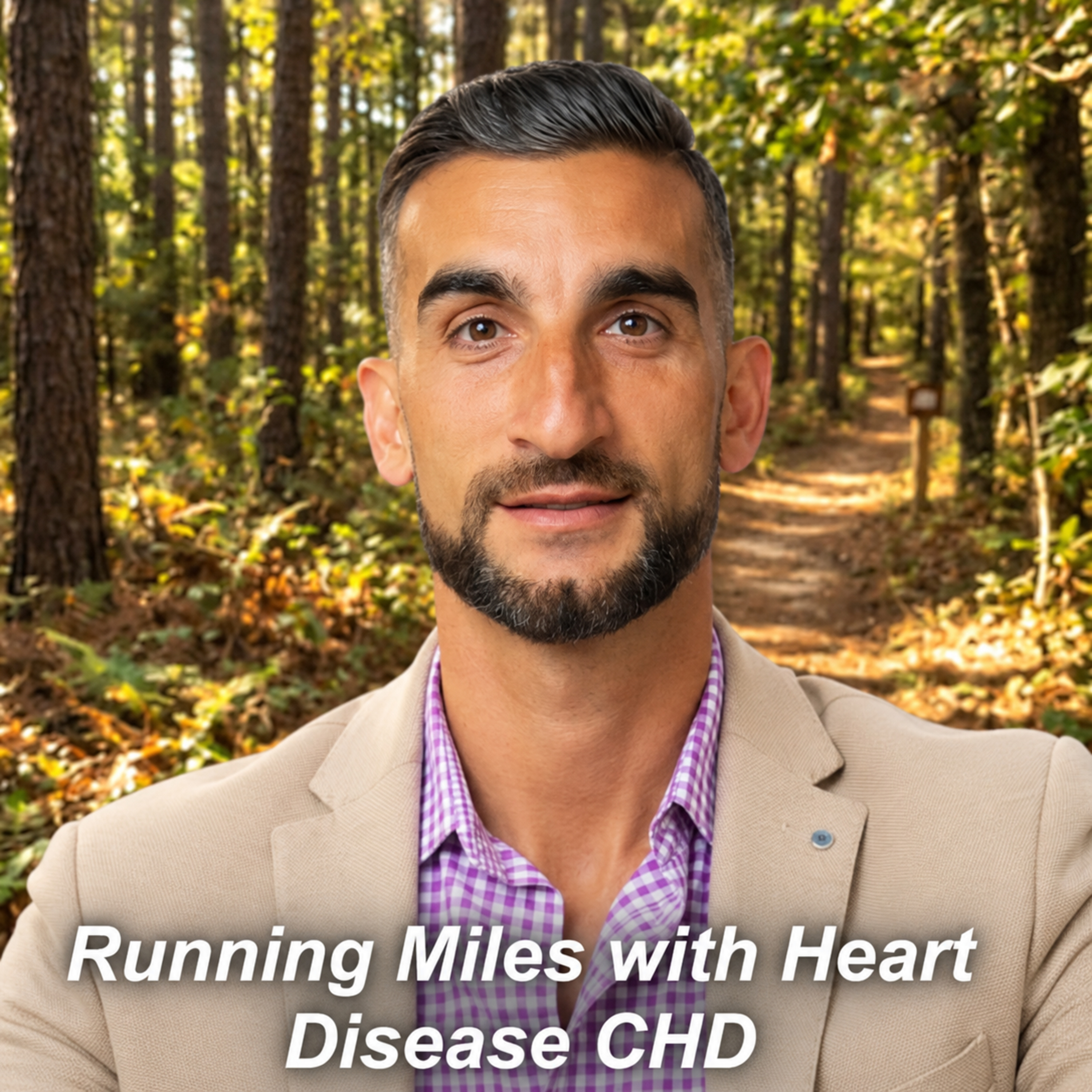
In this episode of Running Miles with Heart Disease CHD, Josh sits down with Dr. Michele Lastella, a sleep and sports scientist and senior lecturer at Central Queensland University, to talk about one of the most overlooked parts of endurance training: sleep.
For ultra runners, sleep can be easy to sacrifice. We have miles to run, families to take care of, jobs to manage, and races to prepare for. But Dr. Lastella explains why sleep isn't simply time spent doing nothing. Training provides the stimulus, while sleep is a major part of the body's adaptation to that stimulus.
Without adequate sleep, your body and brain don't get the same opportunity to recover and respond to training.
We discuss how sleep affects recovery, mood, reaction time, attention, decision-making, perceived effort, and athletic performance. Dr. Lastella also explains why sleep needs are individual and introduces the Sleep Deficit Index—a simple way to think about the difference between how much sleep you actually need and how much you're getting.
• Why sleep should be considered part of your training plan—not an optional extra
• The difference between sleep pressure and your circadian rhythm
• Why the 2–5 AM window can be especially difficult during an ultramarathon
• The circadian nadir and why it may be an important time to consider a nap during an ultra
• How much sleep ultra runners actually get during 100-mile events
• Why even a short nap may help during an overnight race
• The risks of sleep deprivation during long ultras, including impaired attention, decision-making, and reaction time
• How to prepare your sleep during the week leading into a race
• Why consistency matters more than trying to make up for poor sleep with one long night
• The potential role of caffeine naps, or “nappuccinos”
• Non-Sleep Deep Rest and progressive muscle relaxation
• Why athletes shouldn't become obsessed with sleep-tracking data
• Caffeine, evening routines, technology, and creating a better sleep environment
• Why consistency may be one of the most important sleep habits
• What to do if you regularly wake up in the middle of the night
• How travel and jet lag can affect endurance athletes
• Why teenagers have different sleep patterns than adults
• How parents can help young athletes develop better sleep habits
We also talk about the fascinating research Dr. Lastella and his team have conducted on sleep during ultramarathons. One study found that runners in 100-mile events averaged only about 12 minutes of sleep, highlighting just how much sleep deprivation can become part of the ultra experience.
But perhaps the biggest takeaway for runners is simple:
Sleep isn't the time you're taking away from training. Sleep is part of the training.
If you're putting in the miles but consistently failing to recover, you may be leaving some of the benefits of that training on the table.
Dr. Lastella also discusses his upcoming book, Sleep. Recover. Perform., a practical sleep playbook for parents of teenage athletes. The book addresses teenage sleep physiology, school schedules, training demands, technology, and practical strategies families can use to improve sleep.
Learn more about the book:
https://sleeprecoverperform.netlify.app/
Purchase the ebook:
https://payhip.com/b/WiC1XCan
Whether you're training for your first 50K, preparing for a 100-miler, or simply trying to become a healthier and more resilient athlete, this conversation is a reminder that recovery deserves just as much attention as the miles.
Train hard. Recover harder. And don't forget to sleep.
In This Episode, We Discuss:Dr. Lastella's Book
 Apple Podcasts
 Castbox
 Castro
 Goodpods
 Moon FM
 Overcast
 Pocket Casts
 Podbean
 Podcast Addict
 Podcast Republic
 Spotify